Business
Germany's e-invoicing requirement: deadlines and practical rules
German e-invoicing requirement: the short answer
Since 1 January 2025, businesses established in Germany must be able to receive e-invoices for their business purchases. This includes freelancers, businesses using the small-business VAT exemption and businesses whose own supplies are entirely VAT-exempt. An email inbox is generally sufficient as a delivery channel. You also need a process for checking and retaining the invoice data you receive (checked in 2026).
Transitional rules still apply to issuing invoices. Until the end of 2026, all issuers can use other invoices. For smaller issuers, the general relief lasts until the end of 2027. After that, permanent exemptions and any applicable special rules remain. An ordinary PDF is not an e-invoice under the new definition. Check separately what you must be able to receive and which formats you may still send yourself (checked in 2026).
What is an e-invoice, and why is a PDF not enough?
An e-invoice contains invoice information in a structured electronic format. Accounting software can extract the supplier, line items and tax amounts without first interpreting an image or prose. The format must enable electronic processing. A readable document alone does not meet that requirement (checked in 2026).
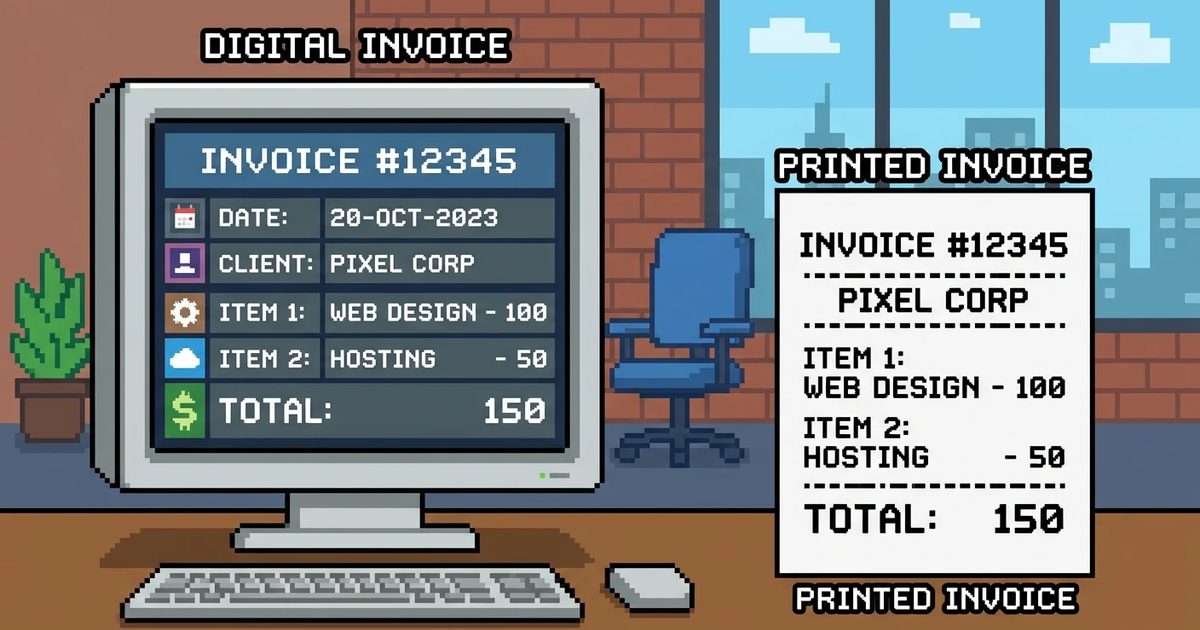
An ordinary PDF mainly reproduces the visual appearance of an invoice. Being able to select text, or having software recognise amounts through OCR, does not turn it into structured invoice data. The legislation calls these documents, along with paper invoices, “other invoices”. They are not automatically prohibited, but they do not satisfy an applicable e-invoicing requirement (checked in 2026).
The distinction concerns the file, not the delivery method. The same email could contain a compliant e-invoice as an XML attachment or merely an ordinary PDF invoice. Placing a PDF in an invoicing portal does not automatically make it an e-invoice either. Ask your software provider about the actual export format, rather than just looking for a “send invoice digitally” feature.
Understanding XRechnung and ZUGFeRD
XRechnung is an XML-based standard that implements the European EN 16931 standard for use in Germany. Its permitted syntaxes are UBL and UN/CEFACT CII. Both describe structured invoice data. An XRechnung therefore does not have to be a UBL file, and an arbitrary XML file is not automatically an XRechnung (checked in 2026).
You normally use a viewer to read it. The viewer presents the data as an understandable invoice. That view helps you check the contents, but it does not replace the original XML. Pay particular attention to the description of the supply, bank details, VAT treatment and connection to the actual order, rather than relying only on a green technical validation result.
ZUGFeRD combines a PDF/A-3 document with embedded XML. You can open the visible component like a PDF while suitable software processes the XML. If the components differ, the XML is authoritative for the structured invoice. Not every profile is sufficient: MINIMUM and BASIC-WL do not meet the requirements for a complete e-invoice. Check which profile is being used and validate the file against the appropriate rules (checked in 2026).
Your workflow should guide the choice. If a customer needs pure XML, XRechnung is a natural option. If you also want a familiar PDF view, a suitable ZUGFeRD profile may work. Compliance with tax legislation and technical acceptance by a particular customer portal are separate questions, however. Check both before your first submission.
Legal basis: what the law actually requires
The Growth Opportunities Act, or Wachstumschancengesetz, revised the invoicing rules in section 14 UStG, Germany's VAT Act. The central case is a supply taxable in Germany between businesses established in Germany, made for the recipient's business. Your status as a business for VAT purposes matters, not your legal form or whether you think of yourself as “just a small freelancer” (checked in 2026).
The tax administration explains its approach in the BMF letters dated 15 October 2024 and 15 October 2025 and in its FAQ. These are application letters or administrative instructions, not a separate resolution replacing the legislation. The transitional provisions are in the Act itself. For an individual case, consider the law, exemptions and administrative interpretation together (checked in 2026).
“Established in Germany” means more than having a German tax number. The registered office, place of management or a fixed establishment involved in the transaction can be relevant. A foreign customer, foreign supplier or public-sector customer therefore requires a separate check. The general B2B deadlines are not a complete guide to cross-border or public-sector invoicing (checked in 2026).
Timeline: which transitional rule applies to you?
The following timeline describes the general provisions for affected domestic B2B transactions. The thresholds concern the invoice issuer, not the customer. Check permanent exemptions separately afterwards (checked in 2026).
- Since 1 January 2025: businesses must be able to receive e-invoices. The transitional rules do not postpone this requirement.
- Until 31 December 2026: all issuers can still use paper invoices under the general transitional provision. Another electronic format, such as an ordinary PDF, requires the recipient's consent.
- During calendar year 2027: this relief remains available if the issuer's total turnover in the previous calendar year was no more than EUR 800,000. Above EUR 800,000, this general extension is unavailable.
- Until 31 December 2027: a separate transitional provision permits certain existing EDI procedures with recipient consent, even if they do not yet meet the new format requirements.
- From 1 January 2028: these transitional provisions have expired. Affected transactions then require an e-invoice unless a permanent exemption applies.
(checked in 2026)
The turnover threshold refers to statutory total turnover, not profit, the value of an individual invoice or only your sales to a particular customer. For the extension in 2027, calendar year 2026 is relevant. Exactly EUR 800,000 is still within the threshold. If unsure, have the calculation checked for tax purposes rather than relying on a rounded dashboard figure (checked in 2026).
Also consider the date of the supply and the transmission deadline. The legislation links the relief to particular transaction periods and deadlines for transmitting invoices. A late invoice does not qualify merely because you put an older date on it. Clarify special cases, such as delayed billing or corrections, before sending them (checked in 2026).

Who is exempt: consumers, Kleinunternehmer and low-value invoices
Invoices to private consumers fall outside the general domestic B2B e-invoicing requirement. That does not mean consumer transactions have no invoicing or documentation obligations. It also matters whether the customer is actually buying for its business. A self-employed person can buy the same item for private or business use (checked in 2026).
For supplies by businesses using the section 19 UStG small-business VAT exemption, section 34a UStDV continues to permit other invoices. This is not merely transitional relief until the next deadline. As a Kleinunternehmer, you must still be able to receive e-invoices. If you move into the regular VAT system, reassess your issuance obligations. Being a “small business” in everyday language is not the same as having Kleinunternehmer status for VAT purposes (checked in 2026).
Low-value invoices with a total of up to and including EUR 250, including VAT, can also remain other invoices where the statutory conditions apply. This exemption depends on the invoice amount, not annual turnover. It is not unrestricted for special transaction types, including certain reverse-charge cases. Do not artificially split a single supply to stay below the threshold (checked in 2026).
Further exemptions particularly concern many VAT-exempt supplies under section 4, numbers 8 to 29 UStG, and passenger tickets. A VAT exemption does not automatically exempt your entire business from every e-invoicing rule. Check the specific outgoing supply; the ability to receive incoming e-invoices remains relevant (checked in 2026).
Practical setup for freelancers and small businesses
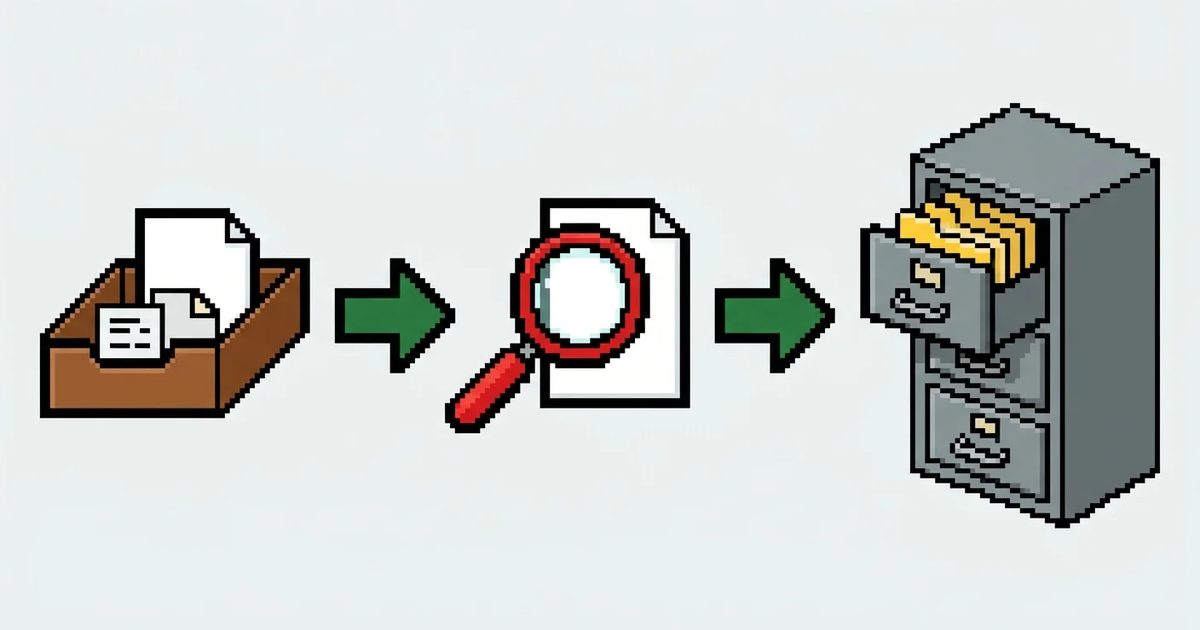
Start with incoming invoices. Give suppliers a reliably monitored invoice email address. Check whether your mail filter permits XML attachments, who handles invoices when you are away and how original files reach your storage system. An inbox is generally sufficient as a delivery channel, but it does not organise approvals or long-term retention for you (checked in 2026).
Open a sample incoming invoice in a suitable viewer and compare its contents with the order and delivery. Do not accept changed bank details without checking. Even a technically valid e-invoice can contain incorrect information or come from a fraudster. Confirm unusual changes through a previously established contact channel.
For outgoing invoices, you can use accounting software, a customer portal or a standalone generator. The E-Invoice Generator helps you create structured invoice data as XML. Check its notes about the output format and external validation. Downloading a file from a generator guarantees neither correct VAT treatment nor acceptance by every customer portal.
If you need a quotation first, you can use the Quotation Generator. A quotation is not an invoice, however. Transfer order details carefully later rather than simply renaming the quotation document. In particular, the supply period, invoice number and VAT treatment need attention before you send an invoice.
Agree with the customer whether invoices should arrive by email, portal or another agreed channel. An XRechnung can generally be sent as an XML email attachment. A Leitweg-ID routing identifier is not generally a statutory requirement for normal B2B exchange; public-sector customers may have specific requirements. Ask them about the reference, format and submission channel (checked in 2026).
Before your first real submission, test the whole process: generate an invoice, check it with a suitable validator, have the customer import it and locate the original file afterwards. Discuss technical errors with your software provider and tax questions with your adviser. For recurring invoices, a connected workflow is usually more helpful than repeatedly copying information manually between applications.
Common mistakes and misunderstandings
“If I scan my invoice, it becomes electronic.” The scan remains an image. A Word file or an ordinary PDF processed with text recognition also fails to meet the new definition. Conversion must produce a complete, suitable structured invoice dataset. Check the imported contents, because text recognition can assign information incorrectly (checked in 2026).
“I can still send paper, so I do not have to accept XML.” The transitional provisions concern issuance. They do not postpone the incoming-invoice requirement. Kleinunternehmer status does not remove the requirement to receive e-invoices either. Mixing up these questions can lead you to reject valid incoming invoices (checked in 2026).
“My customer must consent to every electronic invoice.” For a legally compliant e-invoice in domestic B2B transactions, that consent is generally unnecessary. For other electronic invoices, such as an ordinary PDF during the transitional period, it remains relevant. Agreeing on the specific delivery channel is a separate matter (checked in 2026).
“The XML exists, so the invoice must be correct.” A validator checks technical and business format rules, not whether the invoiced supply actually took place. For ZUGFeRD, also make sure the PDF view and XML show the same contents. An invoice correction needs a traceable reference, rather than a silently overwritten file (checked in 2026).
Fines and input VAT: avoid blanket claims
According to the current BMF FAQ, issuing an invoice in another format instead of a required e-invoice is not, by itself, an administrative offence under the current wording of section 26a UStG. The common claim that every wrong format automatically triggers a fine is therefore too broad. Other breaches, such as not issuing an invoice or violating retention obligations, are separate matters (checked in 2026).
The wrong format is not without consequences. A customer can demand an e-invoice under civil law. Also, an invoice in another format is generally not a proper invoice where an e-invoice was mandatory. That can complicate input VAT deduction. The tax administration does, however, describe correction options, possible objective evidence and relief where a recipient reasonably believed the issuer could use transitional provisions. Permanent loss of input VAT deduction is therefore not automatic either (checked in 2026).
Correct an error together with your business partner where possible and document what happened. If the invoice has already been booked or an audit is underway, ask your tax adviser how to proceed. Quickly converting a file without referring to the original invoice does not resolve every issue.
Storage and retention: generally eight years
The former blanket statement that invoices must be kept for ten years is no longer current. Under section 14b UStG, incoming and outgoing invoices generally have to be retained for eight years. The period begins at the end of the calendar year in which the invoice was issued. Special tax rules may require longer retention. Do not delete files solely on the basis of an unchecked calendar reminder (checked in 2026).
For e-invoices, at least the structured component must remain intact in its original form. A printout or an additionally generated viewing PDF does not replace the original XML. For ZUGFeRD, keeping the complete file as received is practical. Also retain tax-relevant attachments and keep invoices, supporting documents and corrections connected in a traceable way (checked in 2026).
Organise access permissions, backups and a filing system in which you can find documents. Document how invoices arrive, are checked and are stored. An email inbox alone is an unreliable long-term filing arrangement. Conversely, the BMF expressly says that storing e-invoices outside a GoBD-compliant data-processing system does not, by itself, constitute a breach for VAT purposes. This creates neither a blanket obligation to buy particular archiving software nor permission to alter invoices at will (checked in 2026).
What to do now
Clarify your status and affected outgoing supplies, check the applicable transitional provision and set a changeover date. At the same time, establish a monitored incoming-invoice channel. Create a test invoice, validate it technically and check receipt with a customer. Finally, make sure you can later open and identify the original file and its relevant attachments.
You do not have to automate every possible interface immediately. For occasional invoices, a manageable manual process can be sufficient. What matters is that the format, contents, transmission and retention fit together and that you have tested a real invoice through the entire workflow.
Frequently asked questions
Does the e-invoicing requirement apply to me, or only to B2B transactions?
What are the transition deadlines for 2026, 2027 and 2028?
What is the difference between XRechnung and ZUGFeRD?
Do Kleinunternehmer have to issue e-invoices, and what about low-value invoices?
Is emailing a PDF invoice enough?
Can I be fined for sending the wrong format?
Does my business customer have to consent to an e-invoice?
Do I have to retain e-invoices for ten years?
This handbook provides general guidance, not tax or legal advice. The information was checked on 8 November 2026. Correct treatment depends on the transaction, business establishment, VAT status and any special rules. Ask your tax adviser if in doubt. Neither a generator nor technical validation replaces a tax review.
Sources & status of these figures
Legal and source checks completed on 8 November 2026. The original publication dates of older BMF letters are retained. References to 2026 mean the sources were checked for this article, not that every source was newly published in that year. Legislation and administrative guidance can change.
- BMF FAQ: introduction of mandatory e-invoicing, especially questions 4, 8, 11, 12, 12b, 12c and 13. https://www.bundesfinanzministerium.de/Content/DE/FAQ/e-rechnung.html | checked 8 November 2026.
- BMF letter dated 15 October 2025: introduction of mandatory e-invoicing, amendments to the VAT Application Decree; supplements the letter dated 15 October 2024. https://www.bundesfinanzministerium.de/Content/DE/Downloads/BMF_Schreiben/Steuerarten/Umsatzsteuer/Umsatzsteuer-Anwendungserlass/2025-10-15-einfuehrung-obligatorische-e-rechnung.html | checked 8 November 2026.
- UStG section 14: invoices, structured formats, domestic businesses and mandatory details; revised through the Growth Opportunities Act. https://www.gesetze-im-internet.de/ustg_1980/__14.html | checked 8 November 2026.
- UStG section 27 paragraph 38: transitional provisions and total-turnover threshold. https://www.gesetze-im-internet.de/ustg_1980/__27.html | checked 8 November 2026.
- UStG section 14b: invoice retention, start of the period and reference to special tax-procedure rules. https://www.gesetze-im-internet.de/ustg_1980/__14b.html | checked 8 November 2026.
- UStG section 26a: administrative fines, distinguished from the BMF interpretation of a format-only breach. https://www.gesetze-im-internet.de/ustg_1980/__26a.html | checked 8 November 2026.
- UStDV section 33: low-value invoices and statutory limitations. https://www.gesetze-im-internet.de/ustdv_1980/__33.html | checked 8 November 2026.
- UStDV section 34a: invoices for supplies by businesses using the small-business VAT exemption. https://www.gesetze-im-internet.de/ustdv_1980/__34a.html | checked 8 November 2026.
- KoSIT / XStandards Einkauf: XRechnung standard, specification, validation and visualisation components. https://xeinkauf.de/xrechnung/ | checked 8 November 2026.
- FeRD: ZUGFeRD FAQ, hybrid format, profiles and relationship to XRechnung. https://www.ferd-net.de/standards/zugferd-faq | checked 8 November 2026.