Energy
Cut Electricity Costs with Measurements and Tariff Comparisons
A high electricity bill can come from high consumption, an expensive tariff or both. Start by separating usage from price, measure the appliances that stand out and try changes that cost nothing. Consider purchases and tariff switches afterwards. That way, you decide using your own figures rather than buying a new washing machine because the old one looks dated.
Look for avoidable costs in your own home instead of borrowing the biggest savings figure from a list of tips. You need your bill, a consumption baseline you can trace and, for individual appliances, suitable measurements. The calculators help with estimates. They do not replace measuring consumption or reading the contract terms.
Understand your electricity bill: separate consumption, unit rate and standing charge
Take your latest bill and find the billing period, the kilowatt-hours used and the associated prices. A higher bill does not prove that consumption has risen. Equally, a cheaper tariff can hide increased consumption when you only look at the euro amount. Compare energy use and costs separately.
| Component | What it tells you | What you need it for | Limitation |
|---|---|---|---|
| Consumption in kWh | Electrical energy drawn during the billing period | A baseline and later checks on consumption | The periods and the loads included must be comparable |
| Unit rate | Price per kWh consumed under your contract | Appliance costs and the value of energy saved | A published average price is not automatically your unit rate |
| Standing charge | A charge independent of consumption for the agreed period | A complete tariff comparison | Does not fall simply because you use an appliance less often |
| Other components | Such as grid charges and other fees included in the tariff or billed separately | Checking what the stated price already covers | Do not add included items again; account for separate charges |
| Monthly advance payment | A payment towards the later bill | Planning payments and checking them against expected consumption | Not a measure in its own right of whether a tariff is cheap |
Your unit rate determines the value of a kilowatt-hour saved. Total costs determine whether switching supplier is worthwhile. Mixing the two makes it easy to overestimate the value of an appliance change or miss a high standing charge in a supposedly cheap tariff.
What the 2026 price figures tell you
The October edition of the BDEW electricity price analysis, published on 28 October 2026, puts the household average for 2026 so far at 37.3 ct/kWh. The page describes the average of available tariffs. This is neither a guaranteed new-customer price nor a specific offer for where you live.
Destatis reported on 30 September 2026 that household electricity averaged 37.97 ct/kWh in the first half of 2026. The figures cover new and existing contracts, including standing charges, unit rates and other components. BDEW and Destatis use different survey bases and periods. You cannot compare the figures as though they were two offers for the same household.
| Price observation | Value and period | Limitation for your calculation |
|---|---|---|
| BDEW household average | 37.3 ct/kWh, 2026 so far, October analysis dated 28 October 2026 | Average of available tariffs, not a guaranteed new-customer price |
| Destatis household electricity | 37.97 ct/kWh, first half of 2026 | Total selling price including the standing charge and other components, not just the unit rate |
| Destatis for low consumption | 57.99 ct/kWh for households using less than 1,000 kWh a year, first half of 2026 | Check the consumption band; allocated fixed costs affect the figure |
| BDEW grid charges | Average of 9.2 ct/kWh, down by 1.7 ct/kWh in the October 2026 figures | Already part of the total household price; do not add on top |
Destatis's comparisons over time also show why figures need a date: in the first half of 2026, household electricity was 6.4% cheaper than in the second half of 2025, but still 16.4% above the first half of 2021. A short-term fall in prices does not contradict a higher level than in an earlier comparison period.
If you use little electricity, be especially careful not to use the total price converted to kWh for appliance calculations. A fixed standing charge is spread across fewer units of energy. Saving electricity does not simply remove that fixed amount. For your next savings calculation, read the unit rate from your own contract rather than using a statistical figure.
Compare your own consumption fairly, with and without electric hot water
Comparing households only helps if their electricity consumption covers the same tasks. If water is heated electrically, that consumption is part of your electricity bill. If it is heated another way, the energy needed does not appear there in the same way. Comparing households solely by the number of people can then lead you in the wrong direction.
The same applies to electric space heating, heat pumps and electric cars. Treat these loads separately wherever your records or measurement options allow it. The aim is not to produce the lowest possible comparison figure, but a useful explanation: how much energy do you need for household use, how much for heating or transport, and where can you change something?
Start with your own history. Record the period and any unusual patterns of use alongside the meter readings. If you have changed how you heat water or added a larger electrical load, note that next to the consumption figure. Without this context, a higher number can look like waste even though electricity is now doing an additional job.
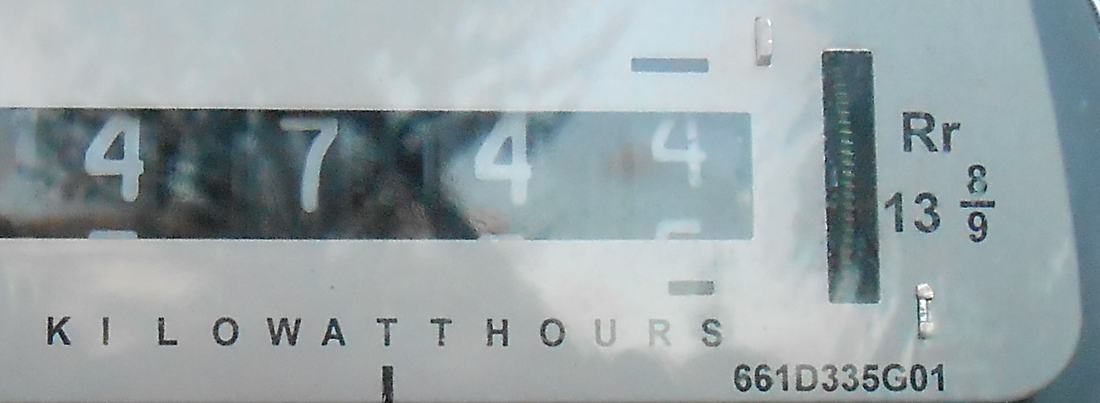
The meter reading log is useful for documenting your baseline. It creates a PDF record of your meter readings. This is an organised record, not a smart meter dashboard: the tool does not read the meter automatically or create an automatic consumption time series. Taking regular readings and comparing them remains your job.
Find power-hungry appliances: measure instead of extrapolating from the rating plate
Watts and kilowatts describe power. Kilowatt-hours describe the energy consumed over a period of time. A brief spell at high power does not automatically make an appliance the biggest expense. A small, constant load can also matter. You therefore need power and operating time or, better still, consumption measured over a suitable period.
The rating plate is not an annual consumption statement. A fridge's compressor switches on and off; washing machine and tumble dryer loads change during a programme. Extrapolating the stated power as though it were continuous can give you a useless annual figure. A single snapshot on a power meter does not solve this: it may also catch an untypical phase of operation.
A seven-step process for measuring and deciding
- Record the starting point. Keep the electricity bill, tariff components and meter reading together. Note the billing period. Consider electric water heating, heat pumps and electric cars separately so they do not distort the search for avoidable household consumption.
- Choose likely major consumers. Pick appliances whose consumption and operating time suggest they may account for a meaningful share of costs. Do not start with every little indicator light while bigger questions about consumption remain unanswered.
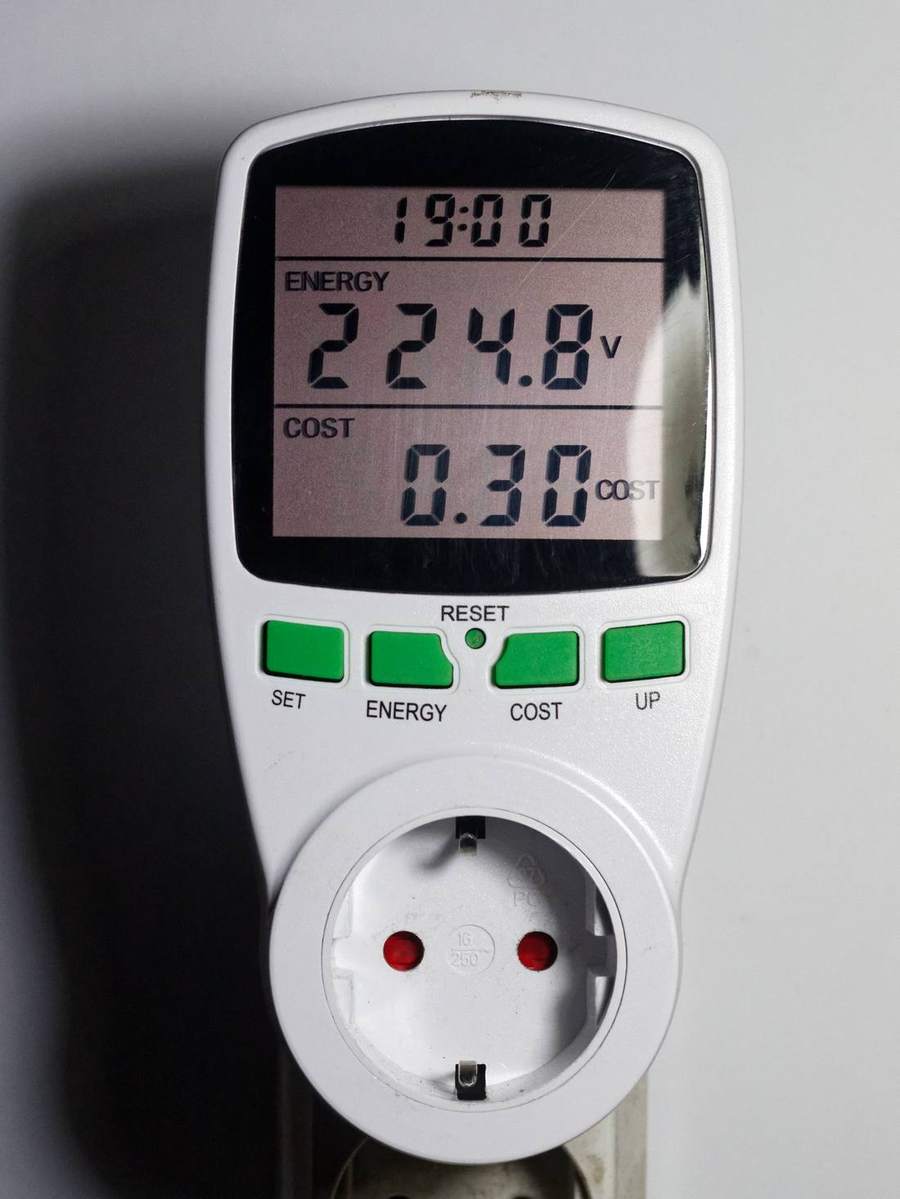
- Measure a typical cycle. Use a meter suitable for the appliance and record a complete, typical cycle of use. For refrigeration and other fluctuating loads, consumption over the measurement period matters, not just the power currently displayed. Do not interfere with fixed electrical installations.
- Calculate costs using your own rate. Multiply measured consumption by your personal unit rate. If you extrapolate to a year, record the frequency or operating time you have assumed. An extrapolation is still an assumption even when the starting value was measured.
- Test changes that cost nothing first. Change a suitable setting or pattern of use and compare the effect under similar conditions. Then judge a purchase by its additional benefit over this already improved baseline.
- Compare tariffs in full. Calculate supplier offers using identical annual consumption and check the contract terms and separately billed charges. Keep any bonus separate. Record the meter reading when switching.
- Check the result afterwards. Compare consumption and costs again under similar conditions. A lower monthly advance payment is not evidence of savings, and a period of unusually low consumption does not prove lasting success.
From a measurement to a cost
The appliance calculation is: Measured consumption in kWh × your own unit rate in €/kWh = energy cost of the measured operation. To calculate annual costs, you also need a justified estimate of annual use. Write down that assumption so you can change it later without changing the measurement itself.
The electricity cost calculator estimates appliance costs from power, operating time and unit rate. It does not compare tariffs or automatically analyse your electricity bill. Its appliance presets are calculation assumptions, not measured statistics on annual consumption. With loads that regulate their power in particular, keep measured energy consumption as your reference and question any assumption of constant power.
The implementation checked uses a default of €0.37/kWh, dated September 2026. That is a tool default, not a current average price for your household. Replace it with your own unit rate. The €0.373/kWh used in the following example is not the same value either, nor is it automatically the price in your contract.
Check standby and connected devices safely
Not every standby function is unnecessary. Some devices need to remain reachable; others need a maintenance or run-on cycle after use. Measure the load and establish what the function does before switching off a power strip. Equally, a dark display is not proof that no electricity is flowing.
What the EU limits do and do not say
According to the European Commission's product overview, the limits within the relevant scope have generally been 0.5 W for basic standby or off mode and 0.8 W with a status or information display since 2025. The tightening to 0.3 W in off mode described there applies only from 2027, not as a general limit for 2026. As of 11/2026.
Product groups and exceptions need to be checked separately. Networked standby also has separate rules. This means neither that every existing device must meet those figures nor that networked standby is free of EU requirements. The overview is not a blanket compliance checklist for all the devices you own.
These figures follow the Commission's page, not a review of the consolidated regulation for individual product groups. A measurement alone is not enough to make a legal assessment of a device.
Our own example calculation with constant power
For the following calculation, the assumed power stays unchanged throughout the year. The calculation is: 1 W × 24 h × 365 ÷ 1,000 = 8.76 kWh/year. At an explicitly assumed €0.373/kWh, this gives a rounded 3.27 €/year. The price is based on BDEW's October average but is used here only as a calculation assumption.
| Assumed continuous power | Annual consumption | Cost at €0.373/kWh | Limitation |
|---|---|---|---|
| 1 W | 8.76 kWh | 3.27 € | Our own example calculation with constant power and year-round operation |
| 10 W | 87.6 kWh | 32.67 € | The same assumptions; not an average household saving from standby |
The example shows how power, time and price work together. It does not say you can definitely save these amounts. The load would have to be present and the operation unnecessary for that period. Shorter standby times or a changing load require different inputs. Use your own unit rate for your decision, not the average value assumed here.
Do not switch off without checking
Refrigeration, alarm systems and medically necessary equipment do not belong in a blanket switch-off plan. For network equipment, establish which functions you still need. Follow the manufacturer's instructions, especially for OLED maintenance cycles and run-on. Potential savings are no reason to interrupt a required process.
Kitchen, laundry and lighting: prioritise changes using measurements
Your consumption determines the order, not a general ranking of appliances. Compare complete operation under appropriate conditions of use. Keeping food safe and washing laundry properly remain the jobs to be done.
Fridges and freezers
Verbraucherzentrale generally recommends 7 °C for the upper fridge compartment and −18 °C for freezers. This is not blanket permission to store all foods under the same conditions. Highly perishable foods need different safe storage conditions. Check the requirements of your food and the appliance instructions before changing the setting.
For a consumption comparison, record the setting and measure a complete, typical operating cycle. After a change, compare again under similar conditions. A low power reading at one moment does not prove low annual energy use; cooling that happens to be running does not prove unusually high continuous consumption either.

Laundry and eco programmes
An eco programme can take longer yet still use less electricity. Duration alone is not a consumption figure. Measure a complete cycle and record which programme you used and under what conditions. The cycles need to perform similar tasks for a fair comparison. Otherwise, you may mistake a change in washing needs for more efficient use.
The cost per wash includes more than electricity. The laundry cost calculator accounts for electricity, water and detergent separately. This lets you distinguish whether a change affects energy costs or another part of the cost of washing. The calculator's model assumptions are not measurements of every machine's consumption, though.
Lighting at comparable brightness
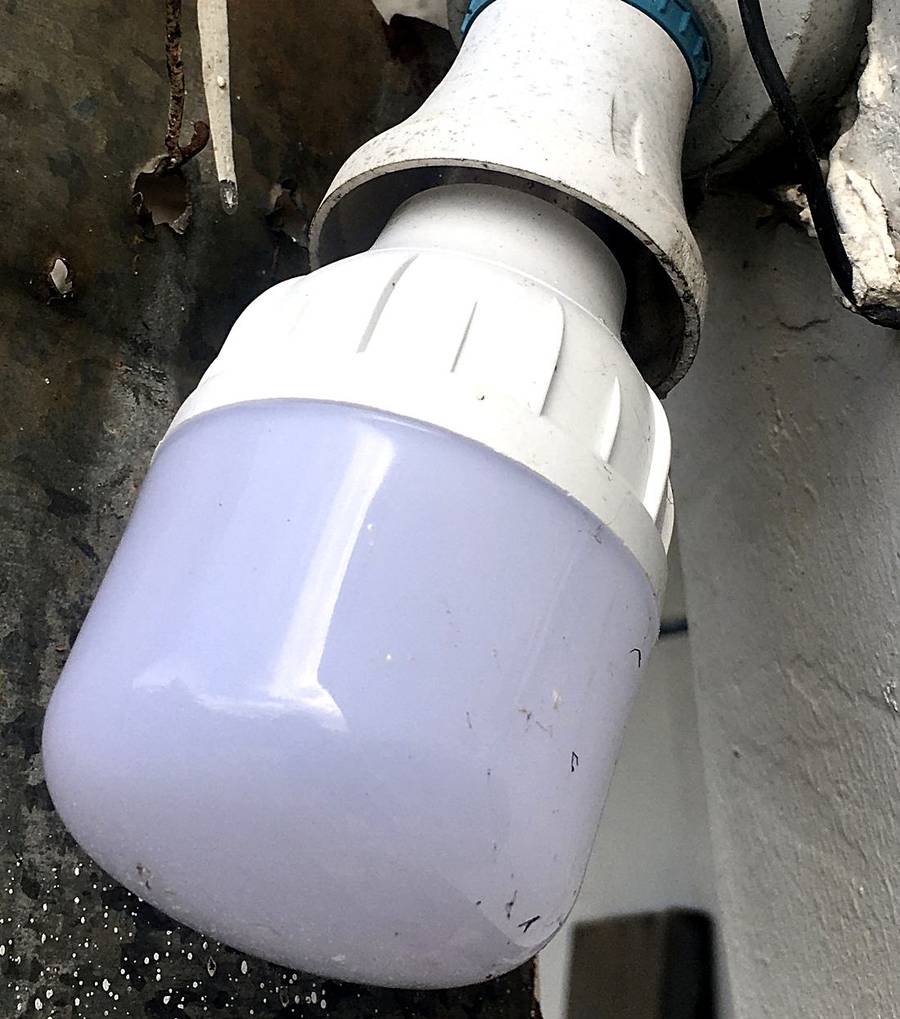
According to Verbraucherzentrale, LEDs use up to 90% less electricity than incandescent and halogen bulbs. The words “up to” are part of the claim. This is not a promise for every lighting replacement, nor does it automatically describe the difference between two already efficient lights. Brightness and operating time must be comparable.
| Area | What to check first | Decision based on this | Limitation |
|---|---|---|---|
| Refrigeration and freezing | Setting and measured consumption over typical operation | Test a sensible setting, then assess repair or replacement | Safe storage conditions take priority; 7 °C generally refers to the upper fridge compartment |
| Laundry | A complete cycle and suitable comparison conditions | Compare eco and current use by energy consumption and total laundry costs | A longer programme is not proof of higher consumption |
| Lighting | Power, comparable brightness and actual operating time | Judge replacement by realistically avoidable costs | Up to 90% less electricity than incandescent and halogen bulbs is not a general savings rate |
These points are based on Verbraucherzentrale's household tips. They do not establish a blanket annual saving in euros for you personally.
When repair or a more efficient appliance can pay off
A new appliance can use less electricity without immediate replacement being the right financial decision. Buying it costs money, the existing appliance may have service life left and repair may be an alternative. The resources needed for manufacturing also belong in the assessment. A lower consumption figure therefore answers only part of the question.
Start with the realistic difference: Annual consumption avoided in kWh × your own unit rate in €/kWh = annual energy savings in euros. Compare that saving with the purchase cost or the extra cost. Replacing a working appliance early and buying a replacement you need anyway are different decisions.
Choose the right basis for comparison
For a working appliance, compare continued use, a worthwhile repair and replacement. If you need to buy a new one anyway, you can weigh the extra price of a more efficient appliance against its additional benefit. Use an appropriate level of use, not the highest possible workload just to make the calculation work.
A simple calculated payback period is purchase cost or extra cost ÷ realistic annual energy savings. It tells you how long the assumed electricity cost benefits would take to offset that amount on paper. It guarantees neither that the appliance will last that long nor that electricity prices will stay unchanged. If you do not know a reliable consumption difference, you already lack the basis for a dependable result.
Finanztip's guidance on saving electricity is the basis for this assessment. It does not establish a general replacement age or a fixed payback period. Check changes that cost nothing first, then compare the purchase against the improved baseline. Otherwise, you credit the new appliance with savings you could have achieved without buying it.
Compare tariffs without being misled by bonuses and low monthly payments
Switching tariffs changes the price of electricity drawn from the grid, not what your appliances consume. An offer can be cheaper despite a higher unit rate if its standing charge is sufficiently lower. A low unit rate can also be cancelled out by fixed costs. Always compare using the same realistic annual consumption.
The basic calculation is: Annual standing charge + annual consumption in kWh × unit rate in €/kWh = tariff costs before separately billed charges and any bonus. Include other separately billed charges where they apply. Do not add items again if they are already included in the stated price.
Keep the bonus separate and compare the following period without it
A bonus is a separate, conditional item. Write down the conditions next to the amount rather than letting it disappear into the unit rate. Calculate the following period without the bonus. You can then see whether the offer suits your consumption without the introductory benefit.
Verbraucherzentrale's guidance on choosing an electricity tariff covers comparison filters, bonuses and contract terms. A comparison site's result is the start of your checks. What matters is the specific offer for your location and the conditions under which the displayed price applies.
| Check | How to compare | Limitation |
|---|---|---|
| Annual consumption | Use the same plausible figure for all offers | After major consumption changes, do not assume the old figure still fits |
| Standing charge | Compare over the same annual period | A low unit rate alone is not enough |
| Unit rate | Multiply by your annual consumption | Published average prices are not a personal offer |
| Other charges | Include separately billed items, such as relevant metering costs | Do not count components already included twice |
| Bonus | Show as a separate, conditional item | Do not treat it as a permanently secured saving |
| Following period | Compare without the introductory bonus | Conditions and price levels can change |
| Price guarantee and contract | Read the scope of the promises and the contract terms | The headline alone is no substitute for the content |
| Monthly advance payment | Check whether it is plausible against the cost calculation | A low advance payment does not mean low annual costs |
Why the monthly payment does not show your savings
Monthly payments spread out advance payments; they do not replace the annual bill. Setting them lower initially reduces the regular payment. Your actual consumption and agreed prices can still produce the same costs. Check whether the advance payment matches your expected annual costs.
Without a postcode, annual consumption and contract details, no one can credibly identify a “best tariff”. This guide does not give blanket statutory switching or cancellation periods; check the conditions that apply to your case separately.
Dynamic electricity tariffs: who might benefit from flexibility
A dynamic electricity tariff is not another name for guaranteed cheap night-time electricity. Prices can change, leaving you with price risk. According to Verbraucherzentrale's guidance on dynamic tariffs, you need a smart metering system. Larger flexible loads may benefit if you can shift their operation to suitable times. As of 11/2026.
First ask what you can actually move to another time without disrupting your daily life or necessary functions. Theoretically flexible use is of little help if you do not put it into practice. Account for metering costs and other tariff costs alongside the possible price benefits. One cheap time slot does not prove that the overall contract is cheap.
Separate energy use from price here too: shifting use in time can affect the price without reducing electricity consumption. You therefore need a realistic usage profile and the complete tariff to make a decision. A blanket recommendation for every household would be as inappropriate as advising everyone against it.
Balcony solar and battery storage: when generating electricity suits your household
A balcony solar system can replace electricity drawn from the grid. It does not make an existing appliance more efficient. Assess your own generation only after analysing consumption, using realistic assumptions about how much of the electricity generated you will actually use yourself. Use the balcony solar calculator for an estimate with your tariff and an appropriate level of self-consumption, not as a guarantee of savings.
A battery is not an energy source or a general electricity-saving tip. It is only a potential additional investment in a suitable PV setup. Compare its actual additional benefit with the extra costs and storage losses. The battery storage calculator helps with this separate assessment. It does not replace checking whether storage suits your installation and consumption at all.
For more detail, see the handbook Solar: photovoltaics, balcony solar and battery storage. Consumption analysis remains the starting point. Continue the calculation using demand after your energy-saving measures: consumption you have already avoided cannot also be replaced by your own electricity. Nor should you add a battery's benefit as though it were independent of the self-consumption already included.
Document savings and check the assumptions
Keep measurements, tariff details and decisions together. An appliance measurement needs its time period, operating conditions and the unit rate used. An extrapolation needs the assumed usage alongside it. Later, you can then tell whether consumption has changed or just an assumption in the calculation.
The meter reading log creates a PDF record of readings for this purpose, including documentation when switching supplier. It does not provide automatic measurement or ongoing analysis. Use the electricity cost calculator for your appliances and the laundry cost calculator for the separate costs of a wash. Keep the inputs with each result.
Compare again under similar conditions. Note changes in usage, water heating or major loads alongside the result. Otherwise, a saving can be hidden or only appear to exist. A lower advance payment is not sufficient evidence.
Do not count measures twice. If you first avoid consumption and then switch tariffs, the new price applies to the remaining electricity drawn from the grid. The effect of an LED, an eco programme or your own generation must remain traceable in the same overall calculation. What counts is comparing the complete starting position with the complete new situation, not adding up unrelated advertising promises.
Checklist: cut electricity costs step by step
- Record the bill and baseline reading. Separate consumption, unit rate and standing charge. Note any special electrical loads. The meter reading log creates a PDF record of your readings, not a smart meter dashboard or an automatic consumption time series.
- Measure appliances that stand out. Record complete, typical cycles of use, not just the power on the rating plate. The electricity cost calculator helps estimate costs from power, operating time and your unit rate. It does not compare tariffs or read electricity bills. Presets remain assumptions.
- Check changes that cost nothing and measure again. Establish what can be switched off safely and which settings make sense. For laundry, the laundry cost calculator separates electricity, water and detergent. Its model figures do not replace measuring your machine. Food hygiene and necessary appliance functions must not be compromised.
- Weigh up repair and purchase costs. Compare the realistic annual energy benefit with the costs. Account for remaining service life and the resources needed for manufacturing. Compare against consumption after the changes that cost nothing, not against an unnecessarily inefficient starting setting.
- Compare tariffs by total cost. Use the same annual consumption, add the standing charge, consumption costs and separately billed fees. Keep any bonus separate and compare the following period without it. Record the meter reading when switching; a low advance payment does not prove a saving.
- Only include your own generation where it fits. The balcony solar calculator helps estimate possible savings with your tariff and realistic self-consumption. The battery storage calculator is for the optional investment decision in a suitable PV setup. Include storage losses and extra costs; payback is not guaranteed.
- Check success. Compare documented meter readings and appliance measurements under similar conditions. Update usage assumptions and prices when they change. Only this check shows whether your measures have actually reduced consumption or costs as expected.
Frequently asked questions
How do I calculate the electricity cost of a single appliance?
How do I measure a fridge's electricity consumption properly?
What is the difference between watts and kilowatt-hours?
How much does standby actually cost per year?
Which appliances should I not simply disconnect from the mains?
Why does an eco programme take longer yet still save electricity?
When does a new fridge pay off financially?
How do I compare electricity tariffs with different standing charges?
Is a dynamic electricity tariff worthwhile for an ordinary household?
Why does a low monthly payment not automatically mean a cheap tariff?
This guide offers general information and does not replace legal advice or individual energy advice. Prices and contract terms change. Check your own tariff and the manufacturer's instructions. Food hygiene, medical care and safe electrical installations take priority over any potential electricity savings.
Sources & status of these figures
As of 4 November 2026: the specialist sources listed here were checked directly for the research on 30 October 2026, as was the tool implementation. Price dates and survey periods appear alongside the figures. The EU limits follow the Commission's overview, not a review of the full consolidated legislation.
- BDEW: electricity price analysis, October 2026 figures and price components. https://www.bdew.de/service/daten-und-grafiken/bdew-strompreisanalyse/
- Destatis: household electricity prices in the first half of 2026, comparisons over time and consumption bands, published on 30 September 2026. https://www.destatis.de/DE/Presse/Pressemitteilungen/2026/09/PD26_345_61243.html
- Verbraucherzentrale NRW: saving electricity at home, measuring consumption, refrigeration, LED lighting and manufacturer instructions. https://www.verbraucherzentrale.nrw/wissen/energie/strom-sparen/strom-sparen-im-haushalt-einfache-tipps-10734
- Verbraucherzentrale: comparing electricity tariffs, checking bonuses and contract terms. https://www.verbraucherzentrale.de/wissen/energie/preise-tarife-anbieterwechsel/so-finden-sie-den-passenden-strom-oder-gastarif-6436
- Verbraucherzentrale: dynamic electricity tariffs, smart metering systems, flexibility and price risks. https://www.verbraucherzentrale.de/wissen/energie/preise-tarife-anbieterwechsel/dynamische-stromtarife-fuer-wen-es-sich-lohnt-und-worauf-sie-achten-sollten-97836
- European Commission: standby, networked standby and requirements introduced in stages. https://energy-efficient-products.ec.europa.eu/product-list/standby-networked-standby-and-mode_en
- Finanztip: saving electricity, appliance consumption and replacement decisions. https://www.finanztip.de/strom-sparen/
- studio-tools.online: electricity cost calculator implementation, calculation method, default price and appliance presets, checked on 30 October 2026. https://studio-tools.online/assets/js/stromkosten-rechner.js
- studio-tools.online: in-depth handbook article on photovoltaics, balcony solar and battery storage. https://studio-tools.online/handbuch/solar